
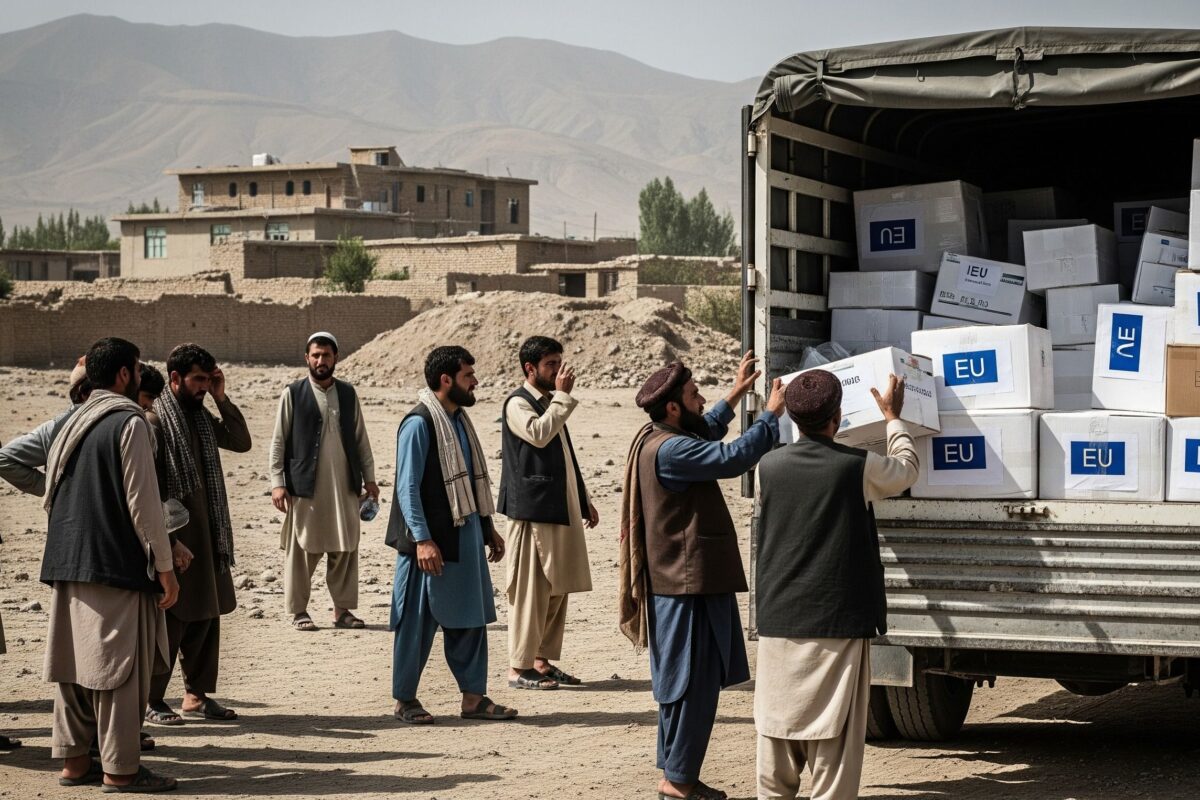
EU Sends €161 Million to Afghanistan: But Is Humanitarian Aid Safe from Taliban Control?
The European Commission decided to increase humanitarian aid to Afghanistan by an additional €161 million. This comes at a time when the country remains under the control of the repressive Islamist Taliban regime, which returned to power after the withdrawal of US troops in 2021. In an exclusive interview with Alpha Tribune, a Commission spokesperson Anna-Kaisa Itkonen describes the purpose and pitfalls of the aid, and in particular how to ensure that the aid does not end up in the hands of the Taliban, the de facto but internationally unrecognised government in the country.
What is the primary goal of this new humanitarian aid package for Afghanistan?
The main goal is to help address the most pressing needs of vulnerable populations, alleviating suffering and saving lives. We will primarily focus on providing lifesaving aid to forced returnees from Iran and Pakistan.

Why is the Commission increasing financial aid now, given the ongoing control of the country by the repressive Taliban regime? How does the European Commission ensure that no part of the aid ends up in the hands of the Taliban? Are there independent monitoring mechanisms?
Mohlo by vás zajímat:

The European Commission maintains a zero-tolerance policy on aid diversion and works actively to prevent Taliban interference whilst enabling humanitarian actors to operate in a principled and accountable environment. EU humanitarian aid is exclusively channelled through certified humanitarian partners – UN agencies and international NGOs – with no funding going to or through the de facto authorities.
We maintain robust monitoring mechanisms through our implementing partners and strict due diligence procedures to ensure aid reaches those most in need whilst preventing diversion. The EU actively coordinates with international donors and humanitarian actors to maintain clear demands that the Taliban allow effective, principled, and accountable humanitarian access.
How has the reliability of organizations which are responsible for delivering aid on the ground been assessed?
All our humanitarian partners must go through a certification procedure and are subject to monitoring and reporting requirements to ensure the proper use of the funding.
Is there any level of cooperation or coordination with the Taliban in terms of logistics or security during the distribution of aid?
The EU conducts operational engagement with the de facto authorities to enable the delivery of aid on behalf of our humanitarian partners, for instance by engaging in humanitarian diplomacy to resolve access constraints imposed by the de facto authorities. This engagement is carefully calibrated to ensure it does not confer any legitimacy on the de facto authorities, and is fully in line with the Council Conclusions of 20 March 2023.
Is this aid also motivated by a desire to reduce the number of Afghan refugees heading toward Europe?
EU humanitarian aid is provided according to the humanitarian principles of humanity, neutrality, impartiality, and independence. It is based on existing needs of the population and not linked to migration or other policies.
What specific outcomes does the Commission expect from this round of assistance?
Are there measurable indicators in place to track its impact? Is there evidence that this aid is meaningfully improving conditions for ordinary Afghans, or is it merely maintaining the status quo?
EU humanitarian funding goes to life-saving actions, such as food assistance, healthcare and other essential services for populations that otherwise may have no access. Independent assessments of EU humanitarian aid in Afghanistan have confirmed the positive impact of aid. EU humanitarian aid reached 9 million people in 2023 inside of Afghanistan.
Is the Commission considering making future aid conditional on specific political or human rights improvements by the Taliban?
Again, humanitarian aid is purely based on needs and independent of other policies, with a view to alleviate the suffering of the population.